
Mobile App Design
Helping Parents Catch Kids’ Events in Time
Helping Parents Catch Kids’ Events in Time
Type
Type
Self-initiated
Self-initiated
Focus
Focus
Decision-Making UX
Behavioral UX
Decision-Making UX
Behavioral UX
Role
Role
Product Design
UX Research
Product Design
UX Research
Design Tools
Design Tools
Figma
Adobe Illustrator
Figma
Adobe Illustrator
The Problem
The Problem
The Problem
Since moving to San Jose, I’ve kept running into the same frustration as a parent: I’d discover great local kids’ events only after it was too late—when spots were already gone or the date had already passed.
Since moving to San Jose, I’ve kept running into the same frustration as a parent: I’d discover great local kids’ events only after it was too late—when spots were already gone or the date had already passed.
I tried to “do it right”—following organizers on social media, checking Eventbrite often, subscribing to newsletters, joining parent group chats, and setting reminders. But none of it solved the real problem: Kids’ events are spread across platforms, and the timing slips easily. It’s unrealistic to constantly check everything just to keep up.
I tried to “do it right”—following organizers on social media, checking Eventbrite often, subscribing to newsletters, joining parent group chats, and setting reminders. But none of it solved the real problem: Kids’ events are spread across platforms, and the timing slips easily. It’s unrealistic to constantly check everything just to keep up.
Understanding Parent Behavior
Understanding
Parent Behavior
Understanding Parent Behavior
To better understand why parents miss time-sensitive kids’ events, I focused my research on 4 key questions:
To better understand why parents miss time-sensitive kids’ events, I focused my research on 4 key questions:
How parents discover time-sensitive kids’ events
When they realize timing matters
What they look for before deciding to go
How they feel about the process
How parents discover time-sensitive kids’ events
When they realize timing matters
What they look for before deciding to go
How they feel about the process
I spoke with 6 parents across different family situations, including:
I spoke with 6 parents across different family situations, including:
a parent with multiple kids
a parent with a wide age gap between children
a dual-working parent with limited time
a parent who recently moved to the area
a parent with a baby under one
a parent who mainly relies on social media for event recommendations
a parent with multiple kids
a parent with a wide age gap between children
a dual-working parent with limited time
a parent who recently moved to the area
a parent with a baby under one
a parent who mainly relies on social media for event recommendations
As I listened to their stories and synthesized the conversations using empathy maps, the same frustrations kept coming up.
As I listened to their stories and synthesized the conversations using empathy maps, the same frustrations kept coming up.
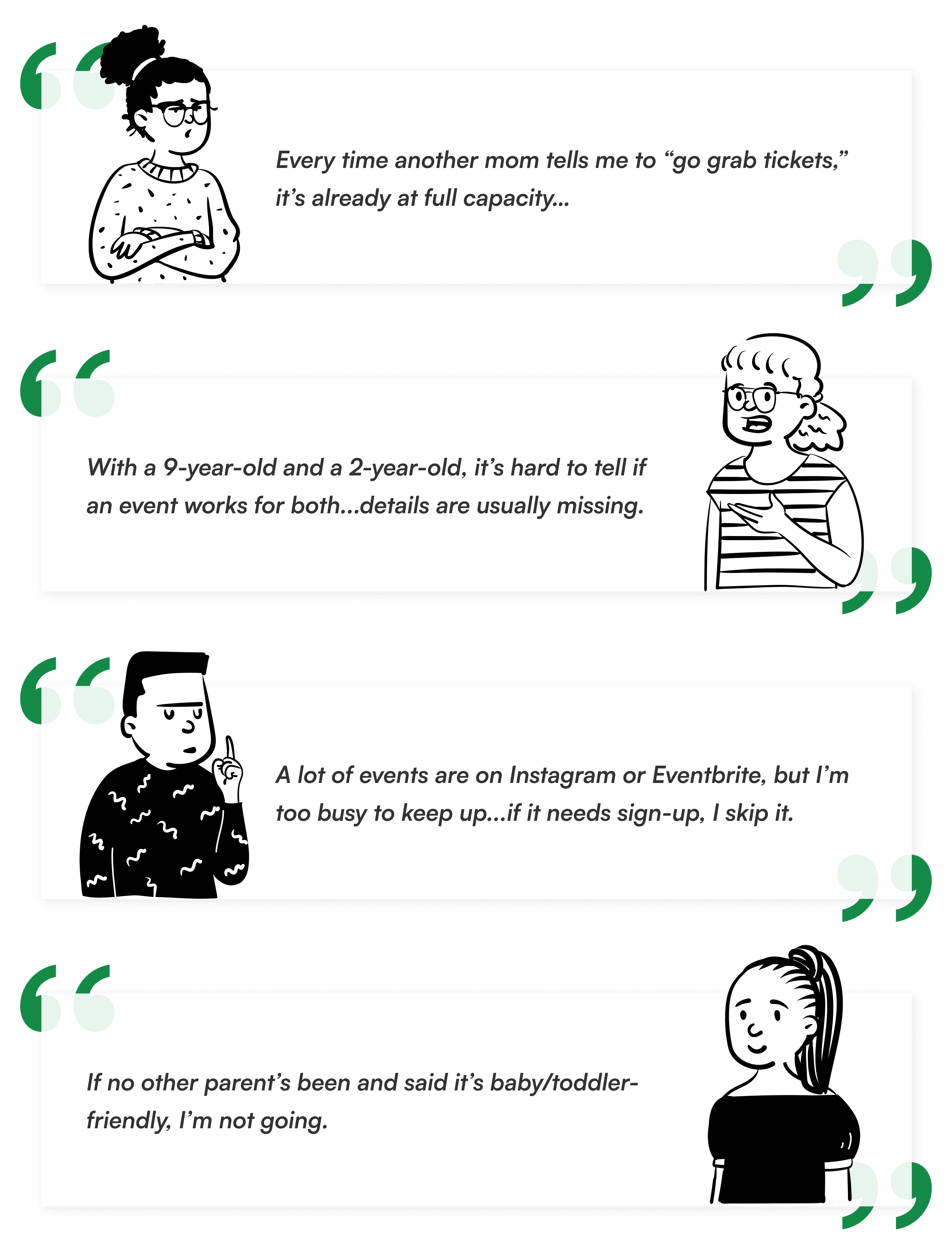
Which formed 4 key insights:
Which formed 4 key insights:
Even when parents are interested, timing is often unclear, forcing them to rely on luck or word of mouth.
Even when parents are interested, timing is often unclear, forcing them to rely on luck or word of mouth.

Event information and feedback are scattered across platforms, so parents have to double-check details themselves.
Event information and feedback are scattered across platforms, so parents have to double-check details themselves.

When there’s no trusted parent input, parents hesitate because they can’t tell if an event will work for their child.
When there’s no trusted parent input, parents hesitate because they can’t tell if an event will work for their child.

With the effort so high and the window so short, many parents simply stop trying and skip these events.
With the effort so high and the window so short, many parents simply stop trying and skip these events.
Why Existing Platforms Fail
Why Existing
Platforms Fail
Why Existing Platforms Fail
To understand why these problems keep happening, I analyzed the main platforms parents use today to find kids’ events, and identified the gaps each one leaves behind.
To understand why these problems keep happening, I analyzed the main platforms parents use today to find kids’ events, and identified the gaps each one leaves behind.
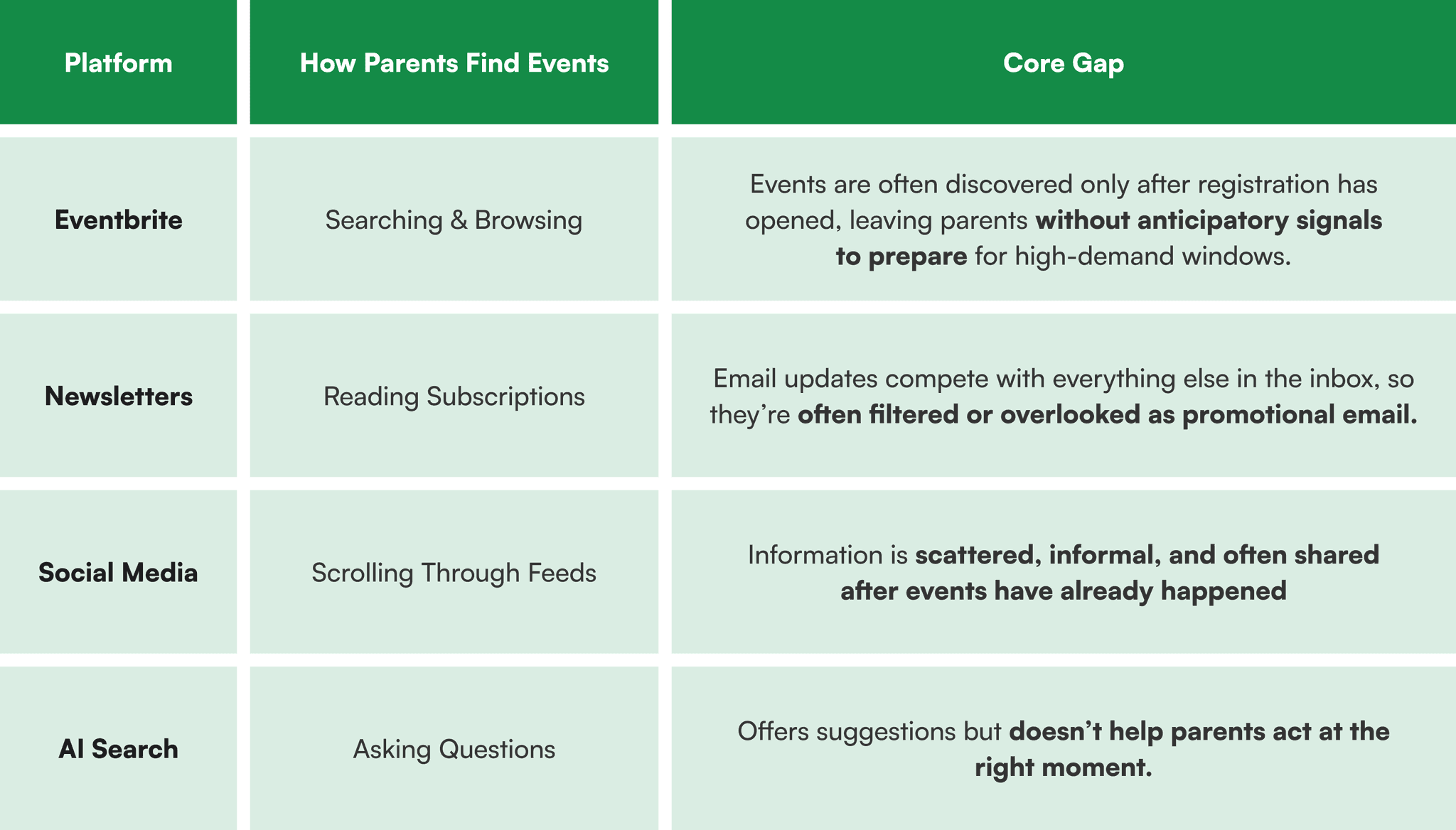
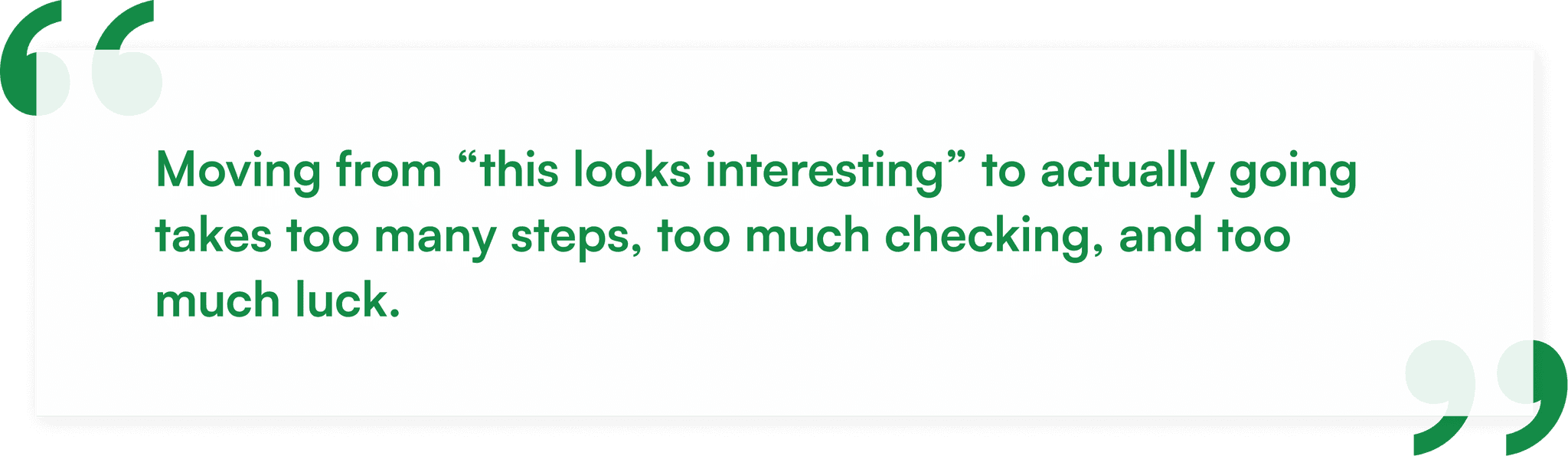
By combining user interviews with this platform analysis, one core problem became clear: discovery is not connected to timing or action. Across platforms, parents can find plenty of great events—but they don’t get early signals or decision-ready details before it’s too late.
By combining user interviews with this platform analysis, one core problem became clear: discovery is not connected to timing or action. Across platforms, parents can find plenty of great events—but they don’t get early signals or decision-ready details before it’s too late.
What to Build
What to Build
What to Build
Rather than adding more features, I focused on reducing mental effort and supporting parent decision-making—helping parents move from initial discovery to acting in time—before the window closes.
Rather than adding more features, I focused on reducing mental effort and supporting parent decision-making—helping parents move from initial discovery to acting in time—before the window closes.
To keep the MVP focused, I narrowed the solution down to 4 core capabilities:
To keep the MVP focused, I narrowed the solution down to 4 core capabilities:
Stay ahead of timing
Stay ahead of timing
Parents shouldn’t have to constantly check or rely on luck to know when the window opens.
Parents shouldn’t have to constantly check or rely on luck to know when the window opens.

Decide in seconds
Decide in seconds
Events should be easy to scan, with age fit, location, and logistics clearly surfaced upfront.
Events should be easy to scan, with age fit, location, and logistics clearly surfaced upfront.
Feel confident it’s the right fit
Feel confident it’s the right fit
Lightweight input from other parents helps reduce hesitation without adding noise.
Lightweight input from other parents helps reduce hesitation without adding noise.
Act without friction
Act without friction
Discovery should flow directly into the next step—save it, get reminded, or buy tickets if needed.
Discovery should flow directly into the next step—save it, get reminded, or buy tickets if needed.
To do that, I looked at the parent journey in three simple stages: finding an event, deciding if it’s right, and acting in time. I listed ideas across each stage, then weighed them based on how much they could help parents versus how complex they would be to build.
To do that, I looked at the parent journey in three simple stages: finding an event, deciding if it’s right, and acting in time. I listed ideas across each stage, then weighed them based on how much they could help parents versus how complex they would be to build.
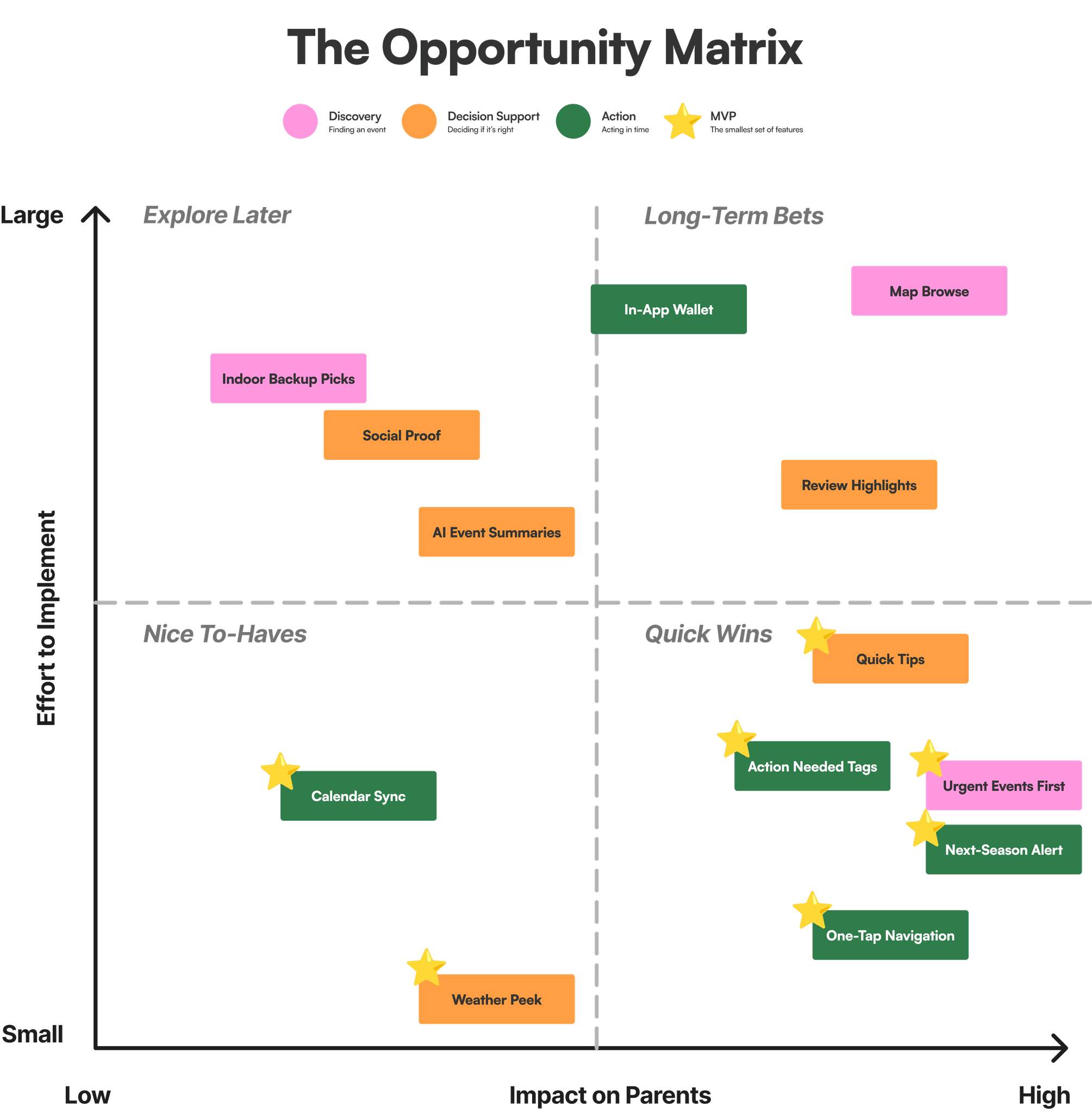
Using the opportunity matrix, I narrowed the scope to a small set of high-impact, low-effort features that address the most critical gaps. These ⭐ starred items form the MVP, while other ideas were intentionally scoped for later.
Using the opportunity matrix, I narrowed the scope to a small set of high-impact, low-effort features that address the most critical gaps. These ⭐ starred items form the MVP, while other ideas were intentionally scoped for later.
Solution
Solution
Solution
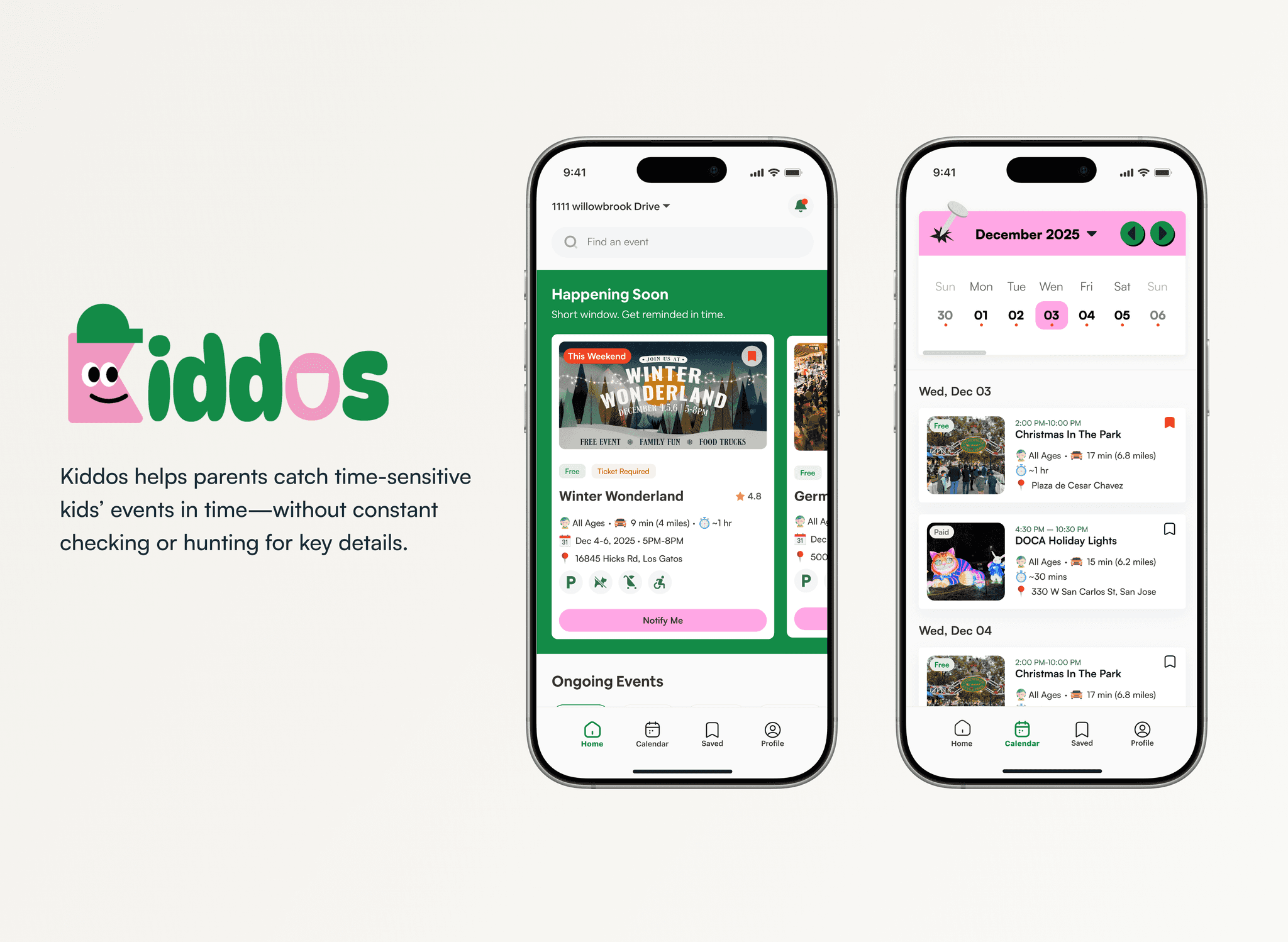
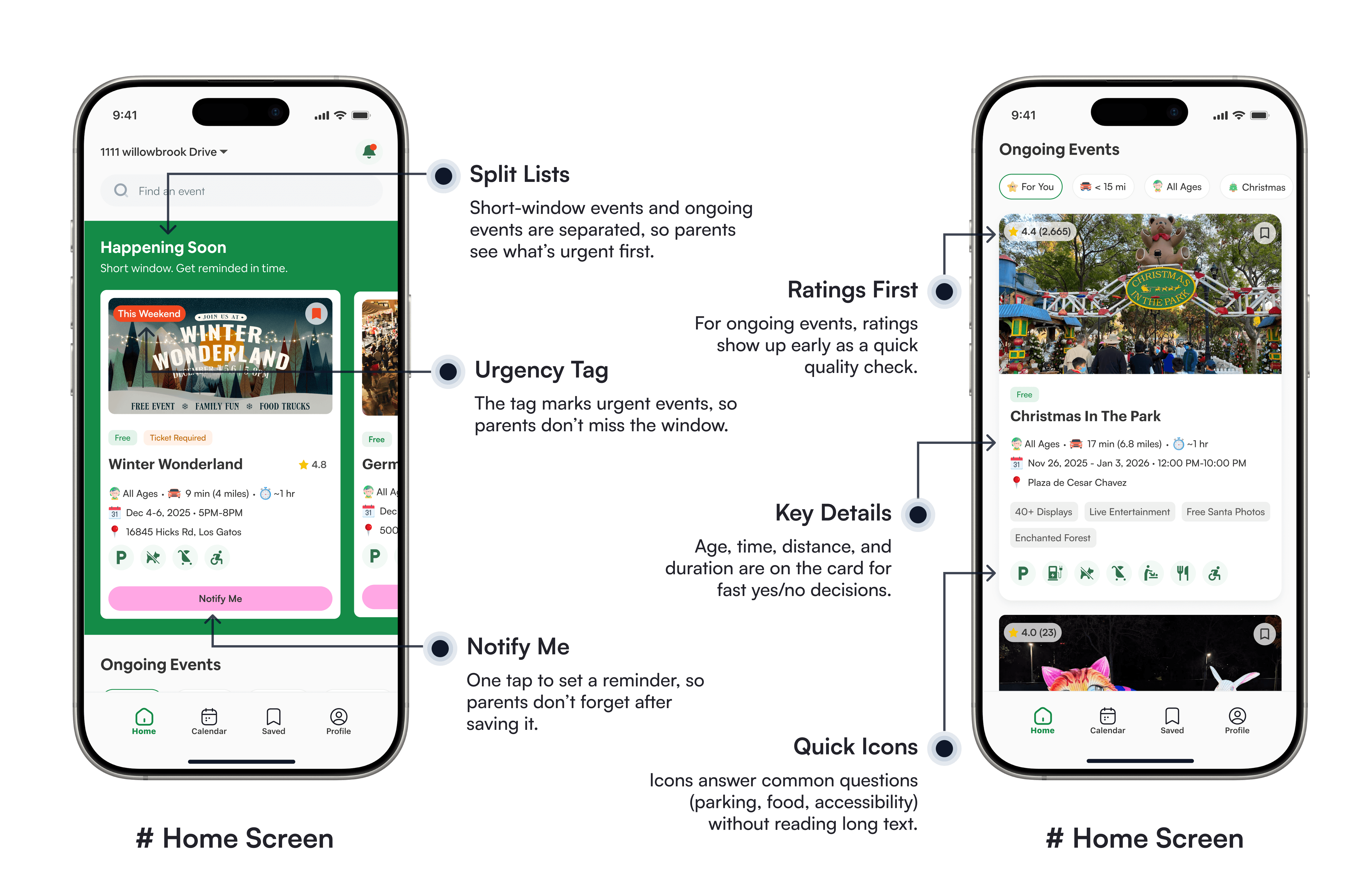
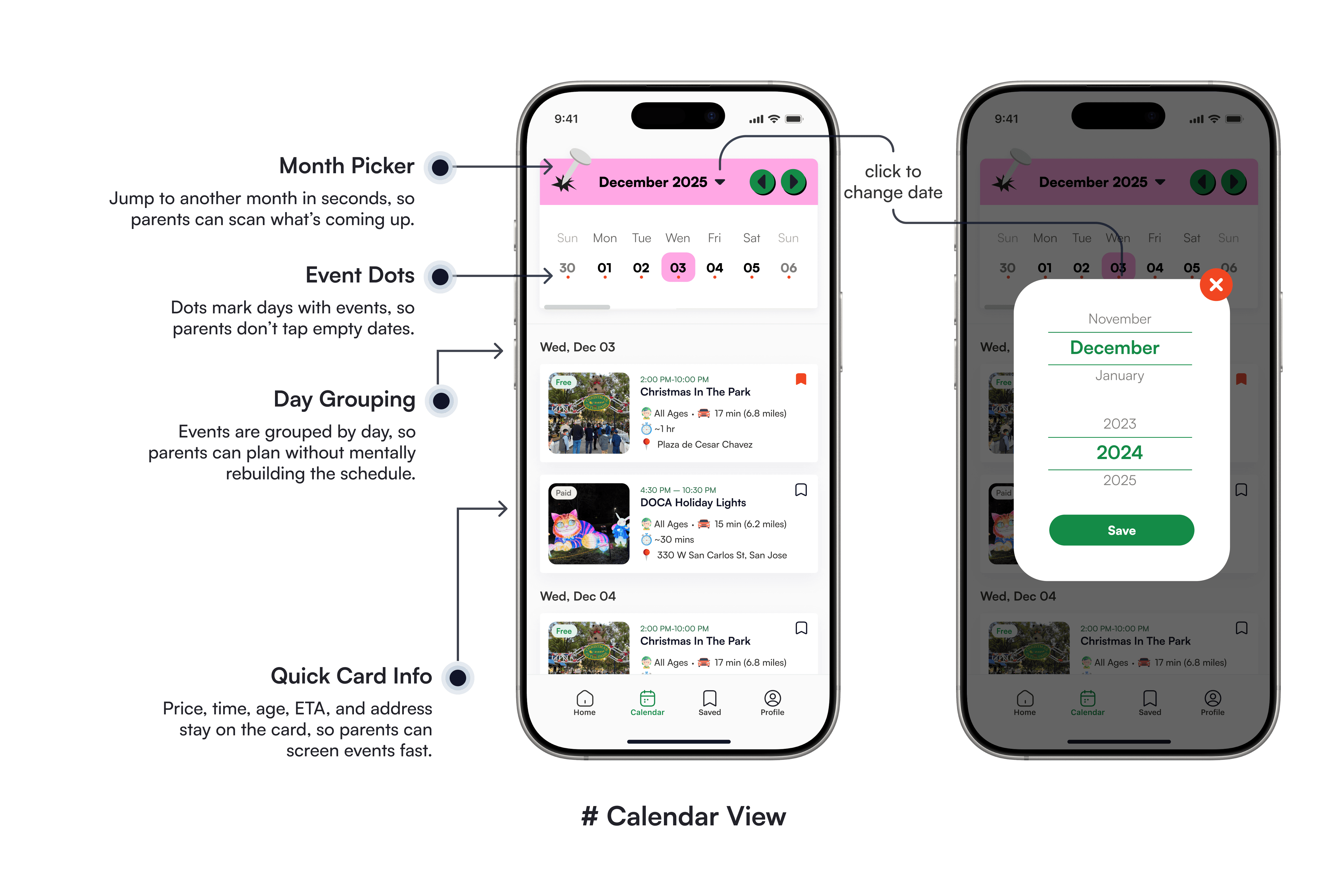
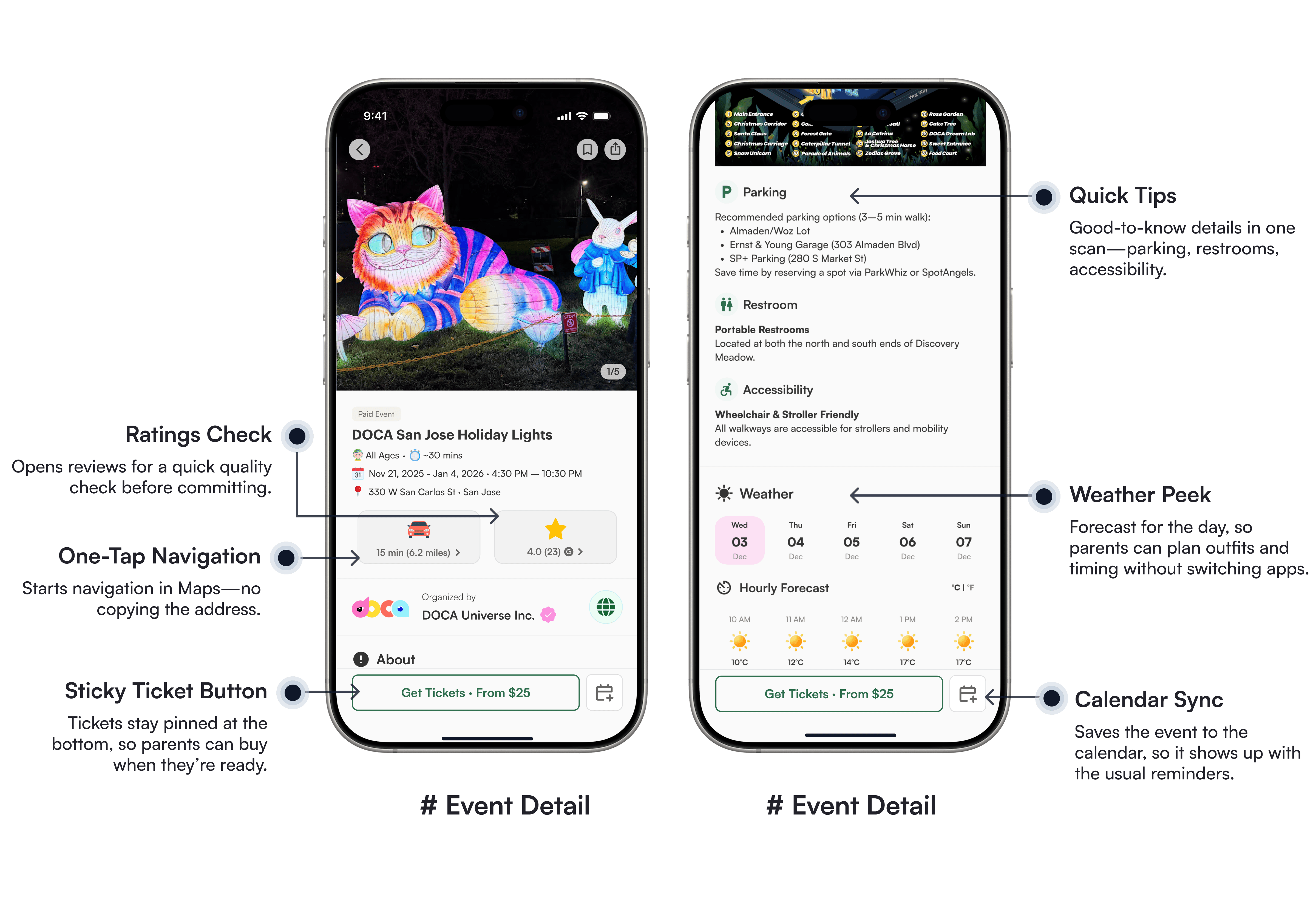
Kiddos isn’t another place to browse events. It’s designed for busy parents who keep finding great events too late—and want a simple way to stay ahead.
Kiddos isn’t another place to browse events. It’s designed for busy parents who keep finding great events too late—and want a simple way to stay ahead.

Previous
Project
Previous
Project
Rilu's
Little Lab
Rilu's
Little Lab